


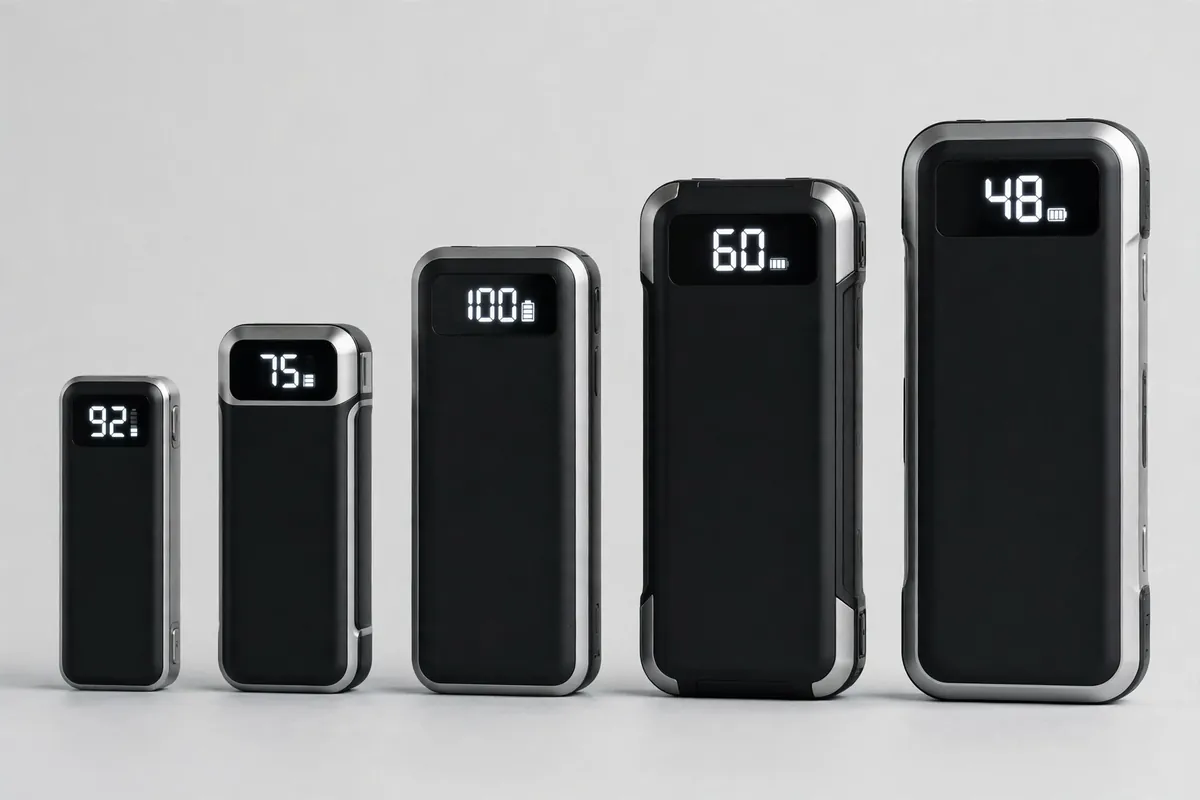
Best Portable Power Banks in 2026: Charge Anywhere Without Worry
Your phone hits 12 percent at the worst possible moment — at the airport gate, on a train, halfway through a work trip. The best portable power banks in 2026 fix that problem for good, and they do far more than top up a phone. This year’s top models can fast-charge laptops, tablets, earbuds, and even best smartwatches of 2026 — all at the same time.
But shopping for one is confusing. Brands shout about milliamp-hours while hiding the number that actually matters. This guide cuts through the noise: the top portable power banks of 2026, what the specs really mean, and how to pick the right one for your bag. If you are building a travel kit, also check our roundup of useful gadgets that pair well with a good charger.
Why Milliamp-Hours Don’t Tell the Whole Story
Capacity in mAh is only half the picture. What decides whether a power bank can fly with you — and how much real energy it holds — is watt-hours (Wh). Airlines cap carry-on batteries at 100Wh, which works out to roughly 27,000mAh. Anything bigger needs airline approval.
The practical takeaway: a 25,000mAh bank sits just under the limit and is the sweet spot for laptop travelers. A 10,000mAh bank is plenty if you only charge a phone. Check the Wh rating printed on the device itself, not just the marketing on the box.
Best Portable Power Bank Overall: Anker Prime 27,650mAh
The Anker Prime is the most capable portable power bank you can buy in 2026. Its 27,650mAh cell delivers 250W of total output across three ports, and the 99.54Wh rating squeaks under the TSA’s 100Wh carry-on limit — so it flies with you.
The color display shows remaining capacity, live input/output wattage, and time-to-empty. The companion app lets you cap the charge level to extend battery lifespan. It recharges in about 37 minutes with dual input. At around $180 and 659g it is not cheap or light, but nothing else does this much.
Best Value for Laptop Users: UGREEN Nexode 25,000mAh
The UGREEN Nexode gives you roughly 90 percent of the Anker Prime’s capability at about half the price. You get 200W total output, a sharp TFT display with real-time wattage, and 90Wh of capacity that handles a 16-inch laptop to more than a full charge.
Charging efficiency sits around 88–90 percent, and it refills in about 90 minutes on a 100W charger. The only real sacrifices versus the Prime are no app and 50W less total output — a gap most people will never notice.
Best Slim Design: Baseus Blade 100W
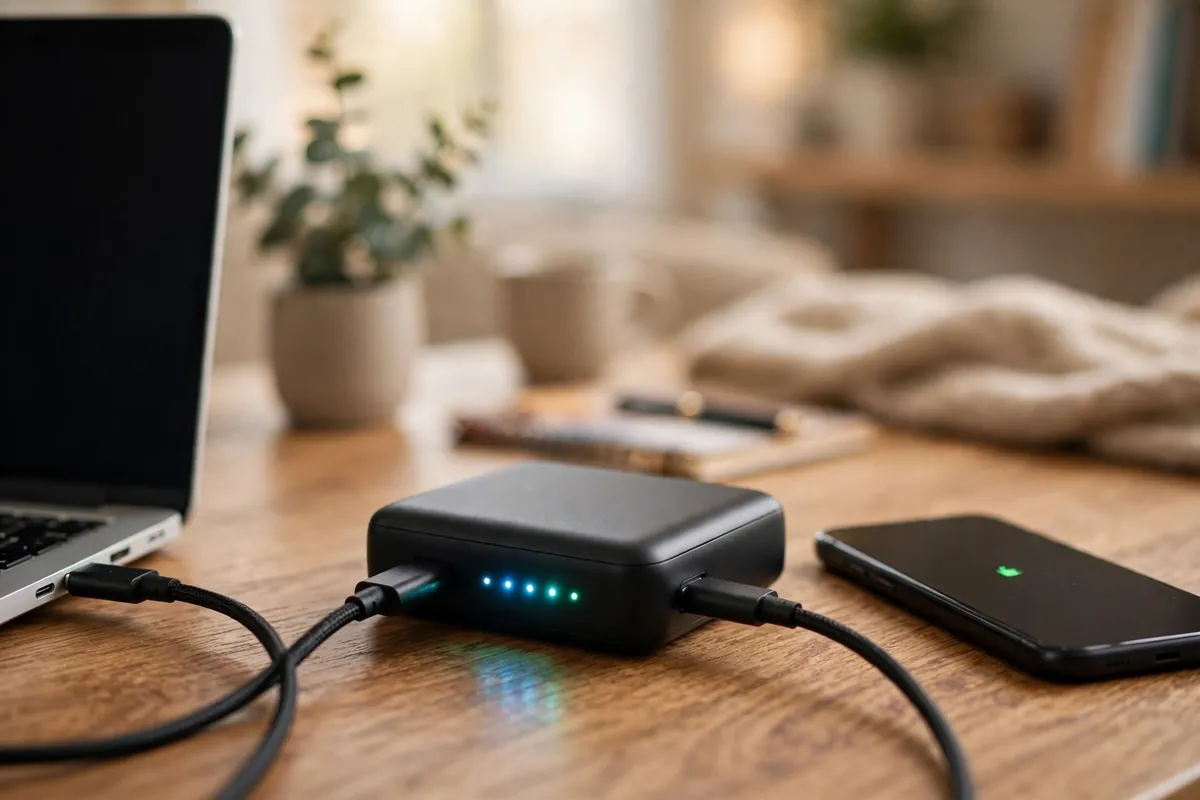
The Baseus Blade looks nothing like a typical brick. At just 18mm thin, it slides into a laptop sleeve next to your notebook, yet still pushes 100W — enough to charge most ultrabooks at full speed.
With 20,000mAh (74Wh) it is comfortably flight-safe, and the digital display keeps you informed. It is the pick for commuters and minimalists who want laptop-grade power without the bulk.
Best Budget Pick: INIU 45W 10,000mAh
You do not need to spend $100 to stop worrying about battery. The INIU 45W packs 10,000mAh with genuine 45W fast charging for around $20. That is enough to fast-charge any phone and top up a tablet.
It is light, pocketable, and the display shows remaining percentage. For students and casual users, this is the rational buy.
Best Everyday Carry: Anker Nano 10K
The Anker Nano 10K is the power bank you will actually carry every day. A built-in retractable USB-C cable means no loose cords, 45W output fast-charges phones, and the whole thing disappears into a jacket pocket.
At around $30, it is the easiest upgrade to your daily routine — keep it in your bag and forget about low-battery anxiety.
Power Bank Flight Rules You Must Know
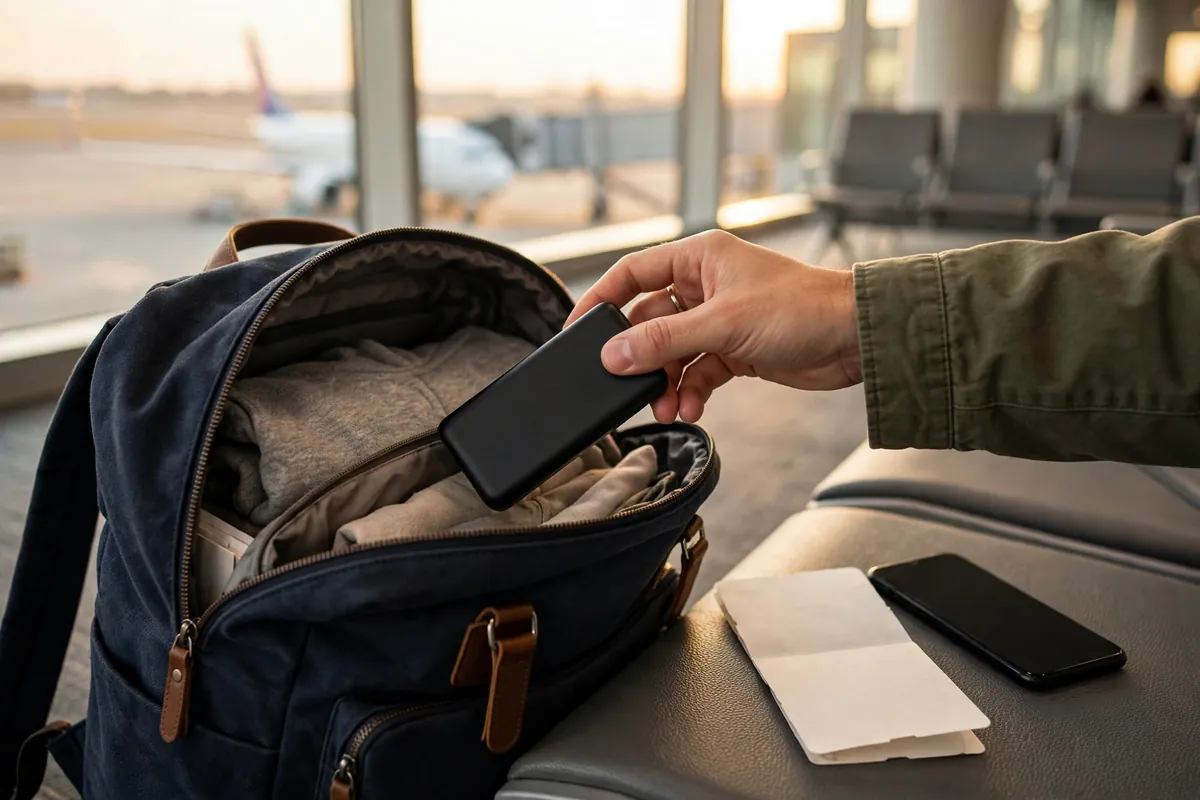
Flying with portable power banks is simple once you know the rules. Keep them in your carry-on — never in checked luggage. Under 100Wh needs no approval; between 101 and 160Wh you need the airline’s okay; above 160Wh is banned from passenger flights.
Security may ask you to show the Wh rating, so buy banks that print it clearly on the housing. The models in this guide all sit under 100Wh and fly without paperwork.
How to Choose the Right Portable Power Bank
Match Capacity to Your Devices
Phone only: 10,000mAh is plenty. Phone plus tablet: 20,000mAh. Laptop in the mix: 25,000mAh or more. Bigger is not always better — capacity adds weight fast.
Check the Wattage, Not Just the Ports
A bank with three ports that shares 18W is useless for a laptop. For laptop charging you want at least 65W on a single port; 100W+ is ideal. Look for USB PD 3.1 support.
Count the Ports You Actually Need
Two USB-C ports cover most people. Built-in cables are genuinely convenient — one less thing to forget. A display showing wattage and percentage is worth paying a little extra for.
Think About Size and Weight
A 600g brick lives in your backpack; a 200g slim bank lives in your pocket. Be honest about where yours will live, and buy accordingly.
Portable Power Bank Safety and Battery Care
Modern portable power banks are safe when you buy from reputable brands, but a few habits keep them that way. Never leave a bank in a hot car — heat is the enemy of lithium cells. Use the cable that came with your devices or a certified replacement; cheap no-name cables can negotiate the wrong voltage.
For longevity, avoid draining your bank to zero regularly. Lithium batteries last longest when kept between 20 and 80 percent charge, so top up before long trips rather than running them flat. If you will not use a bank for months, store it at around half charge in a cool, dry place. Quality banks include overcharge, short-circuit, and temperature protection built in — another reason to stick with established brands like the ones in this guide.
Portable Power Banks 2026 Comparison
| Power Bank | Capacity | Max Output | Weight | Best For |
|---|---|---|---|---|
| Anker Prime 27,650mAh | 99.5Wh | 250W | 659g | Power users |
| UGREEN Nexode 25,000mAh | 90Wh | 200W | 609g | Best value laptop charging |
| Baseus Blade 100W | 74Wh | 100W | 445g | Slim everyday carry |
| INIU 45W 10,000mAh | 37Wh | 45W | ~200g | Budget |
| Anker Nano 10K | 37Wh | 45W | ~200g | Daily pocket carry |
For a deeper look at how these devices store and deliver energy, the power bank article on Wikipedia explains the underlying battery technology.
Frequently Asked Questions
What size power bank can I take on a plane?
Any power bank under 100Wh flies in carry-on luggage with no approval needed — that covers everything up to about 27,000mAh. Keep it in your carry-on, never in checked bags.
How many phone charges does 20,000mAh give?
Roughly three to four full charges for a modern flagship phone, after accounting for conversion losses. Real-world efficiency is typically 85–90 percent of the rated capacity.
Is a 65W power bank enough for a laptop?
Yes for most ultrabooks and MacBook Air-class machines. Larger workstation laptops charge faster with 100W or more, but 65W will still charge them — just more slowly.
Do power banks lose capacity over time?
Yes, like all lithium batteries they degrade with cycles. Keeping the charge between 20 and 80 percent when storing extends lifespan significantly.
Conclusion
The best portable power banks in 2026 remove battery anxiety from your life entirely. Pick the Anker Prime if you want the ultimate do-everything brick, the UGREEN Nexode for the smartest value, the Baseus Blade for slim portability, or the INIU for a budget fix. Match the bank to your devices, check the Wh rating before you fly, and you will never hunt for an outlet again.
