

The self-driving cars 2026 has on the road are no longer a demo or a promise. Waymo now runs around 500,000 paid driverless rides every week across ten American cities, Tesla Robotaxi has expanded from one city to six in a single year, and Amazon’s Zoox has started charging passengers for rides in a car with no steering wheel at all. The driverless era has quietly arrived.
In this guide, I compare the four fleets that matter in 2026 — Waymo, Tesla Robotaxi, Zoox and Baidu’s Apollo Go — on scale, price, safety and where you can actually ride one. Self-driving cars depend on constant connectivity, and the same always-on network story behind 6G wireless in 2026 keeps robotaxis talking to the cloud while they drive.
Self-Driving Cars 2026 Compared: The Four Fleets That Matter
Here is how the leading self-driving cars of 2026 stack up side by side.
| Operator | Where It Runs | Paid Rides per Week | Fleet Size | Driving Approach | Price Signal |
|---|---|---|---|---|---|
| Waymo (Alphabet) | 10+ US cities | ~500,000 | ~3,000+ vehicles | LiDAR + cameras + radar | Similar to Uber |
| Tesla Robotaxi | 6 US cities | Not disclosed | Growing fast | Camera-only vision | $3.25 base + $1.00/mile (Austin) |
| Zoox (Amazon) | Las Vegas | ~10,000 | ~100 vehicles | Purpose-built, no steering wheel | Per-ride fare |
| Baidu Apollo Go | China | 350,000+ (peak) | Thousands | LiDAR + cameras | Per-ride fare |
Waymo: The Clear Leader in Self-Driving Cars 2026
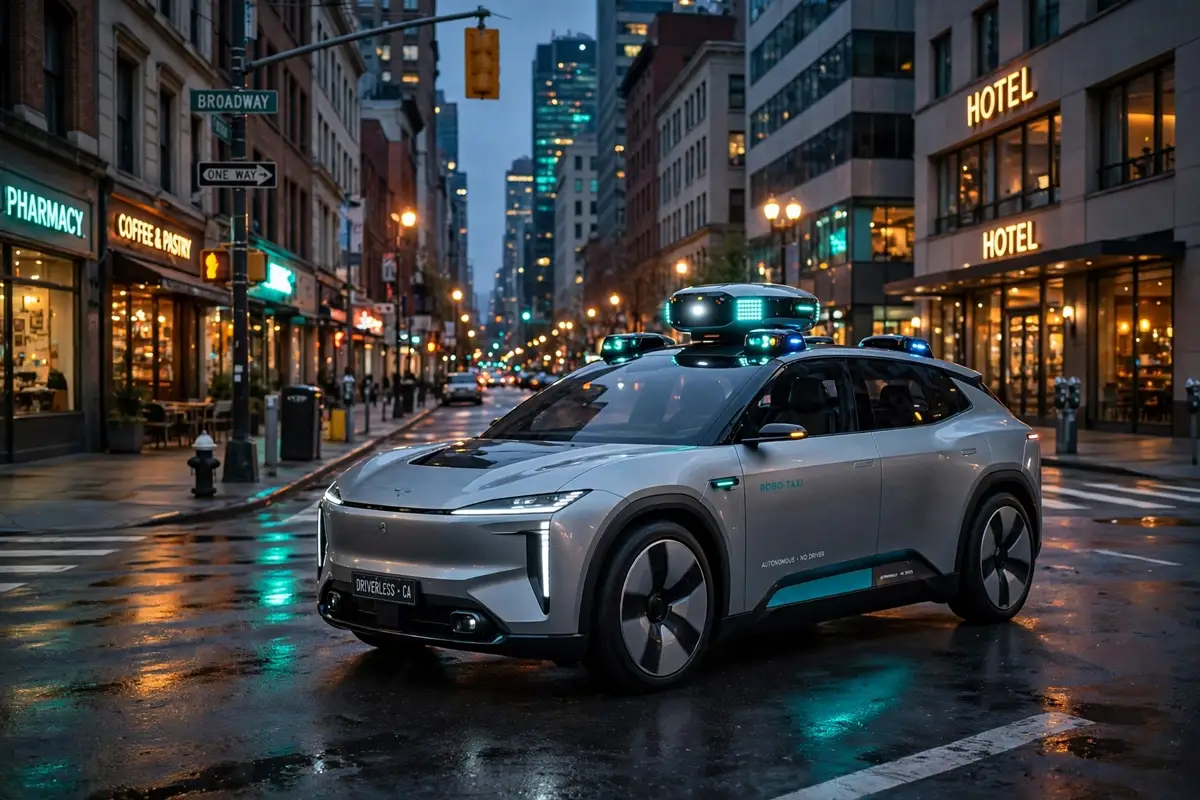
Waymo, owned by Google’s parent company Alphabet, is the largest robotaxi operator in the world by paid rides. The company says it provides roughly 500,000 paid robotaxi rides a week across ten US cities — ten times the roughly 50,000 a week it reported in May 2024. Its cumulative total has passed 20 million paid trips, and in February 2026 it raised $16 billion at a $126 billion valuation.
Waymo’s December 2025 filing with the US National Highway Traffic Safety Administration (NHTSA) listed 3,067 vehicles on its fifth-generation system, and its network now covers fifteen US metro areas. In Austin and Atlanta you can book a Waymo through the Uber app, and London is the company’s stated first international market. Waymo’s cars navigate with pre-built high-definition maps and a constant data link — the same always-on connectivity story as satellite internet in 2026.
Waymo’s safety claim is its strongest selling point. The company reports fewer injury-causing incidents per mile than human drivers across millions of driverless miles, a figure regulators and insurers now watch closely. Even so, no rival comes close to Waymo’s combination of scale, safety record and city coverage in 2026.
Tesla Robotaxi: Catching Up Fast
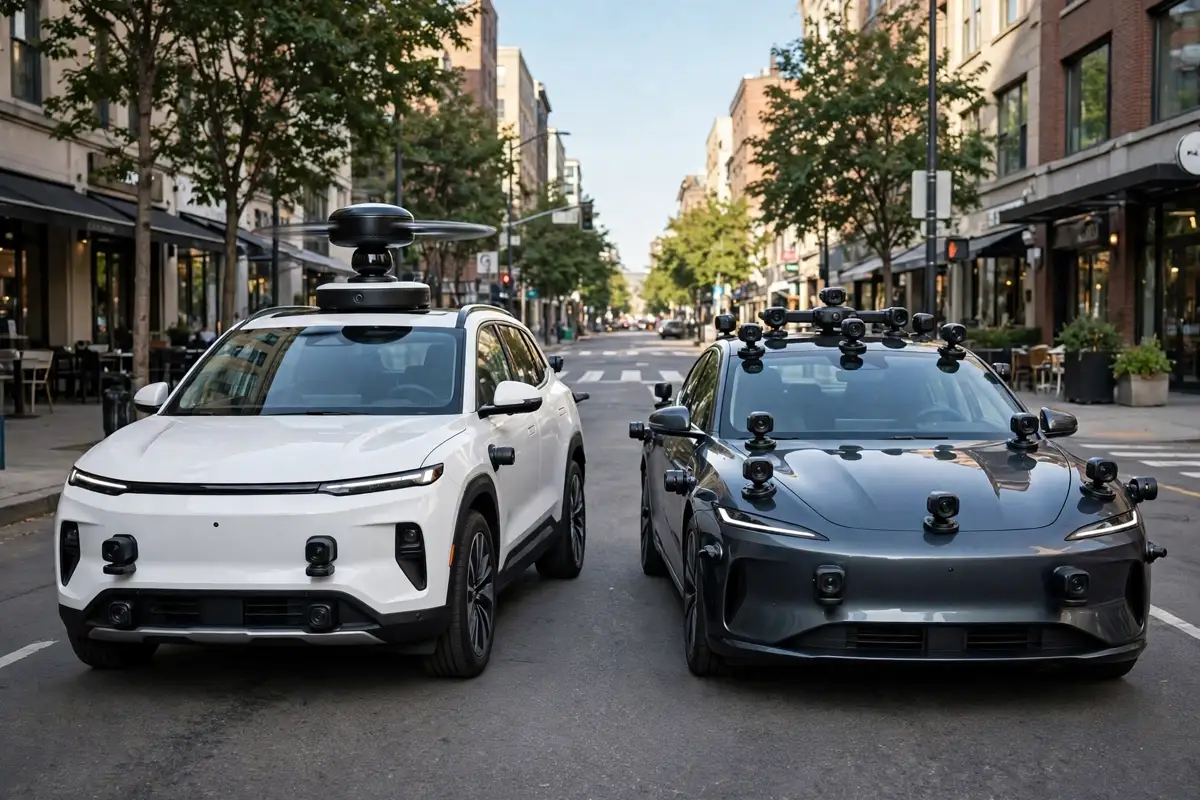
Tesla took the opposite path: camera-only vision, no LiDAR, and a fleet of modified Model Y SUVs. The pilot launched in Austin in June 2025 with just 10 to 20 cars and a safety monitor in every seat. Tesla announced its first unsupervised rides that December and in January 2026, then expanded to Dallas and Houston in April 2026, Miami in July 2026, and Orlando and Tampa on 21 July 2026 — live across six cities by September 2026.
The next step is the Cybercab, Tesla’s purpose-built two-seater with no steering wheel and no pedals, which joined the Austin fleet on 3 September 2026. Nevada has approved up to 5,000 Cybercabs over 12 months in Clark County, covering the Las Vegas metro. On 21 October 2026, Tesla named its next four cities: Las Vegas, Phoenix, San Antonio and Jacksonville, with a production target under $30,000.
The catch is scale. State records showed just 42 Tesla vehicles approved in Texas against 577 for Waymo in August 2026, and Tesla has acknowledged that remote human “teleoperators” in Austin and Palo Alto can take over at low speeds in emergencies. Pricing is aggressive: the Austin base fare is $3.25 plus $1.00 per mile after a March 2026 increase. Tesla’s bet is that cameras and fleet data scale faster than LiDAR — a bet still unproven at Waymo’s volume in 2026.
Zoox: The Car With No Steering Wheel
Zoox, owned by Amazon, builds the car around the passenger: no steering wheel, no pedals, seats facing each other, and a carriage that drives in either direction. Paid rides began on 10 August 2026 in Las Vegas, including airport trips from 3 September, and Zoox reports about 100 vehicles and roughly 10,000 rides a week as of September 2026.
Zoox’s landmark achievement is regulatory, not technical. On 30 July 2026, NHTSA granted a temporary exemption relieving Zoox from parts of eight federal motor vehicle safety standards — the first US federal approval for paid rides in a steering-wheel-free robotaxi, capped at 2,500 vehicles per 12-month period. Zoox is the smallest fleet of the four, but it is the only one designed from scratch for passengers who never drive.
Baidu Apollo Go: The China Scale Leader
In China, Baidu’s Apollo Go is the scale leader. In the first quarter of 2026 it ran 3.2 million fully driverless rides, up 120 percent year on year, with weekly rides peaking above 350,000 in March 2026 and cumulative rides passing 22 million as of April 2026. Baidu has said its Wuhan fleet is approaching profitability per vehicle — a sign that low-cost, high-volume driverless rides are the price-setting model for the whole industry.
How to Ride a Self-Driving Car in 2026
Riding in a robotaxi is simple once you know which app to open.
Step 1: Check if your city is covered
Waymo serves ten-plus US cities through the Waymo One app, and in Austin and Atlanta through Uber. Tesla Robotaxi runs in Austin, Dallas, Houston, Miami, Orlando and Tampa. Zoox runs paid rides in Las Vegas. If your city is not listed, join the waitlist — new cities open every few months.
Step 2: Book in the app and meet the car
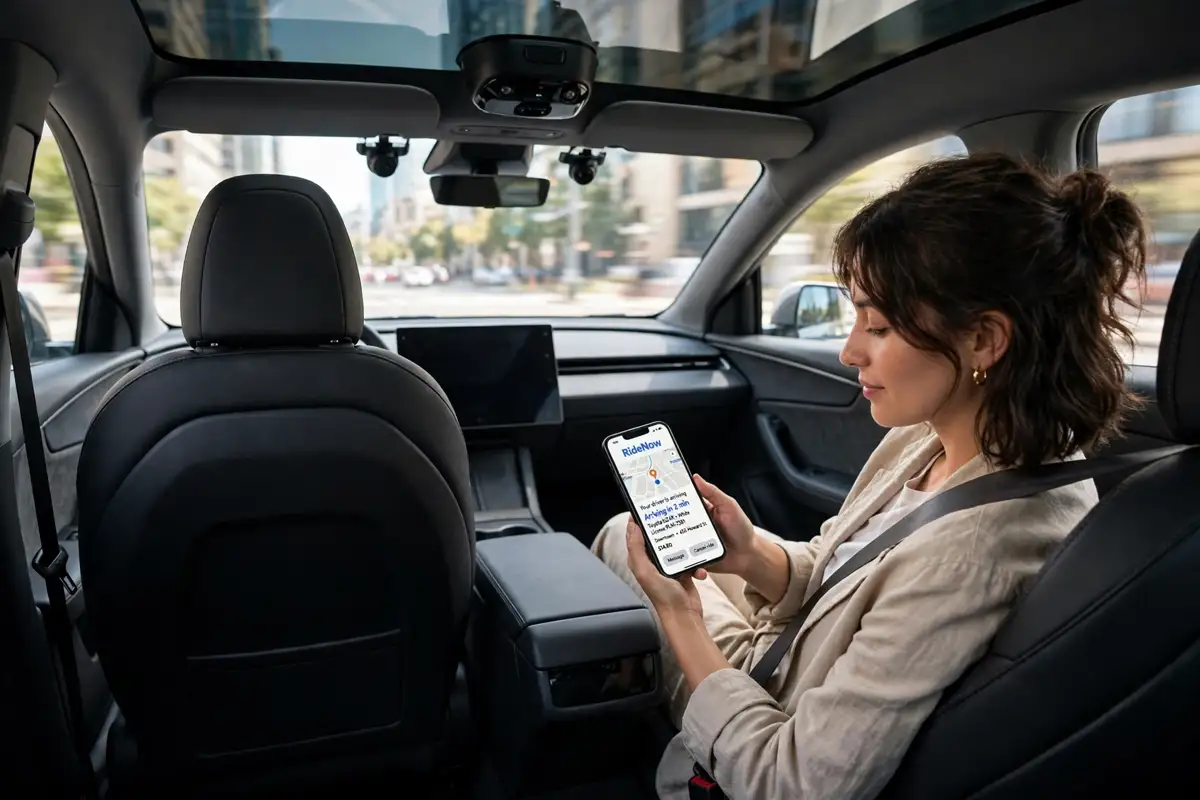
Request a ride like any other. The app shows the car’s live location and licence plate, and it unlocks itself when you confirm the code at the pickup pin.
Step 3: Settle in and watch the screen
There is no driver to talk to, so the car shows its route, speed and surroundings on the rear screen. Buckle up, and use the app to change the music, temperature or destination.
Step 4: Rate the ride
After the trip, rate it in the app. If the car did something odd — a harsh stop, a wrong turn — report it. Operators use this feedback to retrain their driving software.
Are Self-Driving Cars Safe in 2026?
The honest answer is that the data is promising but incomplete. Waymo’s published figures show fewer injury-causing crashes per mile than human drivers across tens of millions of paid miles without a driver. Tesla’s robotaxi service is earlier-stage, with limited public data and an ongoing federal investigation into its camera-only approach. Zoox’s NHTSA exemption shows regulators will approve steering-wheel-free designs, but only in small numbers and under close watch.
One fact puts the whole market in perspective: as NHTSA states, no vehicle currently for sale is fully automated — robotaxis are fleet services, not cars you buy. The cars on sale in showrooms, even the most advanced driver-assistance systems, still need a human driver at all times.
Self-Driving Cars: What the Wikipedia Record Says
The technology behind today’s robotaxis has a long history, from 1980s university experiments to the DARPA Grand Challenges and the first commercial driverless services. You can read the full history in the self-driving car article on Wikipedia.
Frequently Asked Questions
Where can I ride a self-driving car in 2026?
Waymo runs paid driverless rides in ten-plus US cities including Phoenix, San Francisco, Los Angeles, Austin and Atlanta. Tesla Robotaxi runs in Austin, Dallas, Houston, Miami, Orlando and Tampa. Zoox runs paid rides in Las Vegas, and Baidu Apollo Go operates in China.
How much does a robotaxi ride cost in 2026?
Tesla Robotaxi in Austin charges a $3.25 base fare plus $1.00 per mile. Waymo prices its rides similarly to Uber in the same city. Fares vary by city and time of day, just like a normal ride-hailing service.
Are self-driving cars safe in 2026?
Waymo reports fewer injury-causing incidents per mile than human drivers across millions of driverless miles. Tesla’s service is earlier-stage with less public safety data. All operators work under NHTSA oversight, and no vehicle for sale today is fully automated.
Can I buy a self-driving car in 2026?
No. As NHTSA states, no vehicle currently for sale is fully automated. The self-driving cars of 2026 are fleet services you ride in, not cars you own. Tesla’s Cybercab, aimed at a sub-$30,000 price, is designed to change that — but it is not on sale yet.
Which company is winning the self-driving race in 2026?
Waymo leads on scale, with around 500,000 paid rides a week and more than 20 million trips completed. Tesla leads on expansion speed, growing from one city to six in a year. Zoox leads on vehicle design, and Baidu Apollo Go leads on volume in China.
Conclusion
Self-driving cars 2026 prove the technology has crossed from experiment to service. Waymo runs a mature, multi-city network at half a million rides a week. Tesla Robotaxi is expanding fast with a bold camera-only bet and a purpose-built Cybercab on the way. Zoox has won the first federal approval for a car with no steering wheel, and Baidu Apollo Go shows what mass-market driverless rides look like in China. If you live in one of their cities, you can already ride in one today — and by 2027, the list of cities will be much longer.
