


The race for the best VR headsets 2026 has to offer is more competitive than ever. Standalone headsets now pack serious processing power, pancake lenses are bringing flagship clarity down to mid-range prices, and PC VR enthusiasts finally have a long-awaited challenger on the horizon. Whether you want your first headset or your fourth, 2026 is an excellent year to buy — as long as you pick the right ecosystem for your library and budget.
Before choosing, check two companion guides: our roundup of the best cloud gaming services in 2026 explains how to stream high-end games to modest hardware, and our guide to the best gaming headsets in 2026 covers the audio gear that pairs perfectly with any headset below.
Below you’ll find five current picks — each with October 2026 pricing — plus a head-to-head table and a practical guide to choosing without regret. Let’s step in.
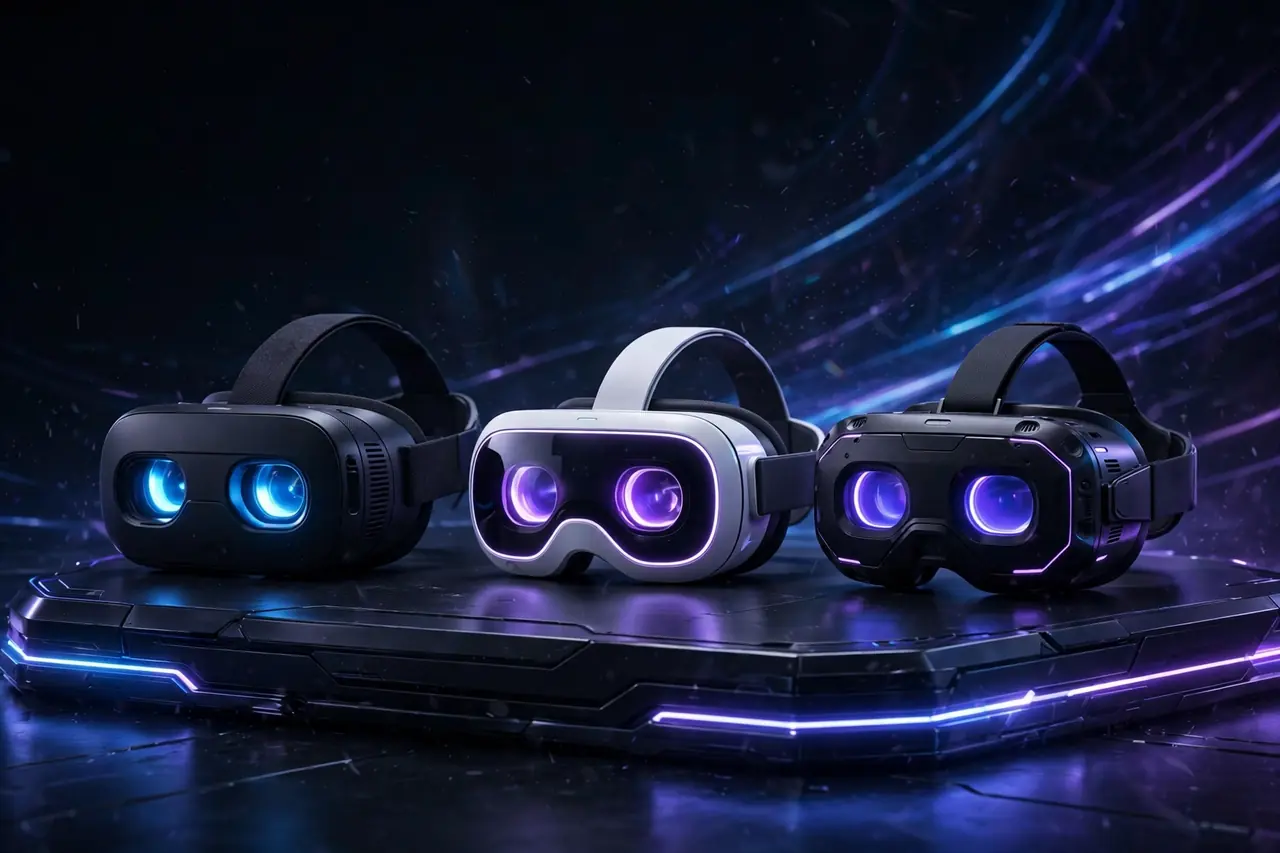
Best VR Headsets in 2026 Compared
Side-by-side specs for every headset worth your attention this year. Prices reflect typical US pricing as of October 2026.
| Headset | Price | Display | Platform | Best For |
|---|---|---|---|---|
| Meta Quest 3S | $349.99 | 1832×1920 per eye (Fresnel) | Horizon OS (standalone) | Best budget first headset |
| Meta Quest 3 | $599.99 | 2064×2208 per eye (pancake) | Horizon OS (standalone) | Best all-around VR |
| PlayStation VR2 | $399 | 2000×2040 per eye (HDR OLED) | PlayStation 5 | Best console VR |
| Valve Steam Frame | $1,059–$1,299 | Not yet disclosed | Steam (PC VR) | PC VR’s future — waitlist only |
| Apple Vision Pro | From $3,699 | Micro-OLED (dual 4K-class) | visionOS | Best spatial computing/media |
The 5 Best VR Headsets of 2026
1. Meta Quest 3S — Best Budget First Headset
At $349.99 for 128GB ($449.99 for 256GB), the Quest 3S remains the smartest entry into VR. It runs the same Snapdragon XR2 Gen 2 chip as the flagship Quest 3 and supports full-color mixed-reality passthrough, so the vast Horizon OS game and app library is entirely open to you. The compromises are the older Fresnel lenses and 1832×1920-per-eye resolution, plus roughly 2.5 hours of battery per Meta’s rating.
For a first headset — or a gift — nothing else at this price gets you into standalone VR with this much content. Buy the 256GB model if you plan to keep a large game library installed.
2. Meta Quest 3 — Best All-Around VR
The Quest 3 is the no-compromise standalone pick: pancake lenses with 2064×2208 resolution per eye, a depth sensor for better mixed-reality room scanning, and the same Snapdragon XR2 Gen 2 power, now at $599.99 for the 512GB model. Note that Meta raised Quest pricing on April 19, 2026, blaming rising memory chip costs — so the era of sub-$500 flagship standalone VR has passed, for now.
If you want the sharpest wireless VR image, the best mixed reality, and the biggest standalone catalog, this is the headset to beat.
3. PlayStation VR2 — Best Console VR
Sony’s PS VR2 brings genuinely premium hardware at $399: HDR OLED panels at 2000×2040 per eye, real eye tracking, headset haptic feedback, and smooth 90/120Hz refresh rates. Its exclusives — from Horizon Call of the Mountain to Gran Turismo 7’s VR mode — remain unmatched on any standalone platform.
The catch is ecosystem lock-in: PS VR2 works only with a PlayStation 5 (the PS5 Digital retails around $599.99), and it is currently unavailable at Sony’s US store. If you already own a PS5, it’s a bargain. If you don’t, factor the console into your total cost.

4. Valve Steam Frame — The PC VR Headset Worth Waiting For
Priced at $1,059 (256GB) and $1,299 (1TB), Valve’s Steam Frame is the headset most PC VR owners are waiting for — but it is still waitlist-only and not yet shipping. Valve’s track record with VR hardware (the Index defined the category for years) makes this the enthusiast bet, provided you’re comfortable waiting and paying PC-VR money.
If you need great PC VR today, the Bigscreen Beyond 2 — an ultra-light headset designed purely for SteamVR — is the best available option right now while the Frame works through its waitlist.
5. Apple Vision Pro — Best Spatial Computing, Not for Gamers
Apple’s Vision Pro (from $3,699 for the M5-chip version) offers the most spectacular display in any headset — dual micro-OLED panels with unmatched clarity — and the best media and productivity experience in the business. For watching films or working in spatial apps, nothing touches it.
But it is not a VR gaming headset. The gaming catalog is thin, there are no motion controllers, and the price is roughly ten times a Quest 3S. Buy it for spatial computing and media; buy a Quest for games.
How to Choose a VR Headset
Pick the Software Library First
Hardware specs age fast; your game library doesn’t. The Quest line wins on sheer standalone content volume, PS VR2 wins on console exclusives, and SteamVR wins on PC depth. Choose the platform whose games you actually want to play, then buy the headset that runs them best.
Comfort and Fit Matter More Than Specs
You will notice a poorly balanced headset within 30 minutes and forget a great spec sheet instantly. Check weight distribution, the head-strap design, and whether the interpupillary distance (IPD) adjustment fits your eyes. Try before you buy wherever possible — especially for the premium models.
Standalone vs Tethered
Standalone headsets (Quest 3, Quest 3S) run games on-device: no cables, no PC, but less raw power. Tethered or PC-streamed setups (Steam Frame, Bigscreen Beyond 2) deliver top-tier visuals but chain you to a gaming PC and usually a cable. Mixed-reality passthrough is also strongest on the standalone flagships.
Count the Total Cost to Start
The headset price is only the beginning. Add accessories (elite straps, extra batteries, prescription lens inserts), game purchases, and — for PS VR2 — the PlayStation 5 itself. A $349 headset with a healthy library can easily become a $600 hobby in year one.

VR Headset Mistakes to Avoid
- Buying discontinued hardware: the Valve Index and Meta Quest Pro are discontinued — skip used listings at inflated prices.
- Choosing by specs alone: a sharper display means nothing if the software library you want lives on another platform.
- Forgetting the total cost: PS VR2 at $399 looks cheap until you add a $599.99 PS5; accessories add up on every platform.
- Ignoring comfort: front-heavy headsets cause neck fatigue in long sessions — strap upgrades are often essential, not optional.
- Waiting forever for the “perfect” headset: the Steam Frame is still on a waitlist; if you want VR now, today’s best options are genuinely excellent.
For the engineering behind these devices — how stereoscopic displays, tracking systems, and head-mounted optics evolved — see the article on virtual reality headsets on Wikipedia, which traces the technology from early prototypes to today’s consumer headsets.
Frequently Asked Questions
What is the best budget VR headset in 2026?
The Meta Quest 3S at $349.99. It runs the same chip as the Quest 3, supports full-color passthrough, and opens the entire Horizon OS library — the best value entry point into VR by a wide margin.
Can I use PlayStation VR2 without a PS5?
No. PS VR2 works exclusively with the PlayStation 5, and it is currently unavailable at Sony’s US store. If you don’t own a PS5, add its ~$599.99 price to your total cost.
When is the Valve Steam Frame shipping?
The Steam Frame remains waitlist-only and is not yet shipping as of October 2026. Valve hasn’t confirmed a general release date, so PC VR buyers who want hardware today should consider the Bigscreen Beyond 2 instead.
Is the Apple Vision Pro good for VR gaming?
No. The Vision Pro (from $3,699) has the best displays in the industry for media and spatial computing, but its gaming catalog is limited and it ships without motion controllers. Gamers should buy a Quest 3 or wait for the Steam Frame.
Did Meta raise Quest prices in 2026?
Yes. On April 19, 2026, Meta raised Quest pricing, citing rising memory chip costs. The Quest 3 now sits at $599.99 for the 512GB model, which makes the $349.99 Quest 3S the value sweet spot.
Conclusion
The best VR headsets 2026 has to offer cover every need and budget: the Quest 3S for first-timers, the Quest 3 for the best all-around wireless VR, PS VR2 for PlayStation owners, the Steam Frame for patient PC VR enthusiasts, and the Vision Pro for premium spatial computing. Start with the game library you want, count the true total cost, and prioritize comfort — do that, and whichever headset you choose will open genuinely better worlds.
